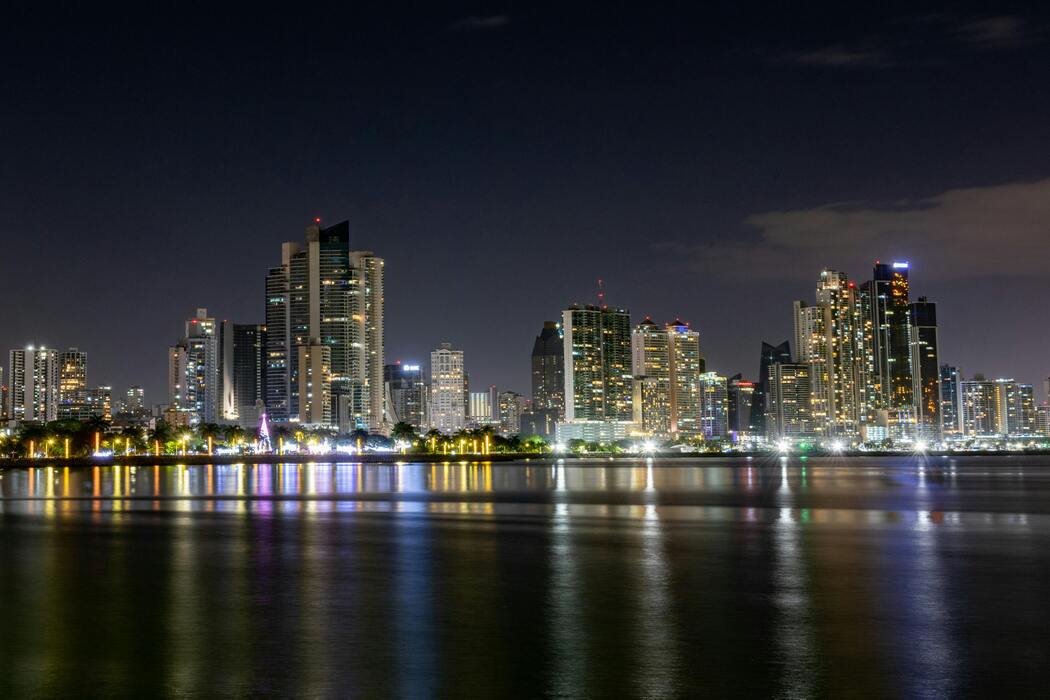

Hong Kong is one of the best-established international financial hubs and business centers in the world.
This small city of just 1,000 sq km and 7.3 million people may not seem as much at first look. But if you know something about the global financial system and China's economy, you know that Hong Kong is a key player.
The city is the star of the new global economy, and its success depends on assuring its position as a top international financial center.
And guess what? That's exactly what they've done. Hong Kong had the freest economy in the world, according to the Index of Economic Freedom for 25 years. Yes, you read that correctly. Last year, Hong Kong fell to second place. All streaks must come to an end, but Hong Kong is still one of the world's best places to do business, the country enjoys unparalleled fiscal health, and, even after months of social unrest, it's a hub for global investors.
All this means Hong Kong has a top-notch stock market and a solid, reliable, and stable banking and finance industry.
As you probably know, Hong Kong is a semi-autonomous region in Southeast China. After a century and a half of British rule, the city was ceded to China under the "One Country, Two Systems" principle as a special administrative region.
That means China owns Hong Kong's sovereignty, but the city has a distinct political and legal system different from mainland China. This allows Hong Kong to have a significant degree of autonomy, which enables it to espouse a free-market economy, an independent judiciary with a strong rule of law with a common law system.
Hong Kong's importance in the global financial arena is understood when you see the HKD (Hong Kong Dollar) as the ninth-most traded currency in the whole world.
What's the key to Hong Kong's success? Simple: Simple taxation system with low taxes, almost free port trade, and a robust, reputable, banking, and financial market.
Why is Hong Kong so vital for the world's economy? First of all, it's China's economic getaway. It's the only place in all mainland China that permits a free flow of capital, which means more than half of the outward investments of China pass through Hong Kong, being the largest source of FDI in China.
Add that it is one of the freest economies in the world with a reliable financial and legal system and its significance for China, and you'll understand both Hong Kong's potential and importance for the global economy.
Thus, Hong Kong is the place you must look at if you want your business to go global, or want to start operating in the Far East, especially China. The entire world trusts Hong Kong as a financial and commercial global hub with some of the largest and freest business activities.
At the same time, it has one of the most impressive regulatory services and systems for taxing and banking services, so fraudsters don't take advantage of its pro-business policies and regulations.
So, you have one of the freest economies in the world, all the major commercial players, a hub for international investment, a gateway to investing in China, a favorable tax system, a robust regulatory frame, and full OECD and international compliance.
You're in the big leagues.
Thus, it's not hard to understand why it's a must to open a bank account in Hong Kong to take your business to the next step.
Banking in Hong Kong is made up of a three-tier system:
● Licensed banks: institutions that serve the public accepting deposits and operating accounts
● Restricted licenses: they offer investment consultancy, specialize in capital markets, and take deposits of at least HK $500,000 (around $64.5k)
● Deposit-taking companies: they provide specialized services in consumer financial services and take securities as long as they have a deposit of at least HK $100,000 (around $12.9k).
There are more than 150 licensed banks in Hong Kong. Nevertheless, only a handful of them opens accounts for non-residents. The ones who do it are mainly international banks such as Citi, HSBC, Standard Chartered, and some local banks.
In general, to open a personal bank account in Hong Kong, you'll be generally asked for proof of address and a valid passport. Sometimes, if you are a non-resident, they may also ask for a recommendation letter, source of funds, and a minimum deposit. All documents should be in English or Chinese. If not, they must be translated by a bank-approved translator.
To open a corporate bank account, they will usually ask for the same documents for a personal account of all signatories of the account, plus certified copies of the company documents (registry, articles of association, etc.), and sometimes banking and commercial references. Some banks may also ask a significant number of questions such as the nature of your clients, how you handle transactions, your transaction volumes, among others
So, this process seems simple right? You may think that opening a personal bank account is something you can handle, and opening a corporate bank account is something your lawyer may do easily. You may be wondering why you need an expert if everything is so easy.
Well, that's because there is a gigantic if: You need to be physically present in the bank to open the account.
And that's where we do our magic.
But first, why should you open a bank account for your business in Hong Kong?