
Panama residency: differentiating the brochures from the reality
Today we’ll look at Panama residency from a new perspective, focusing on specific applicants. U.S. citizens, Canadians, British, and Australians have the opportunity to apply for permanent residency through either the Qualified Investor Visa or the Friendly Nations Program, which presents a lower threshold but with a limited permit.
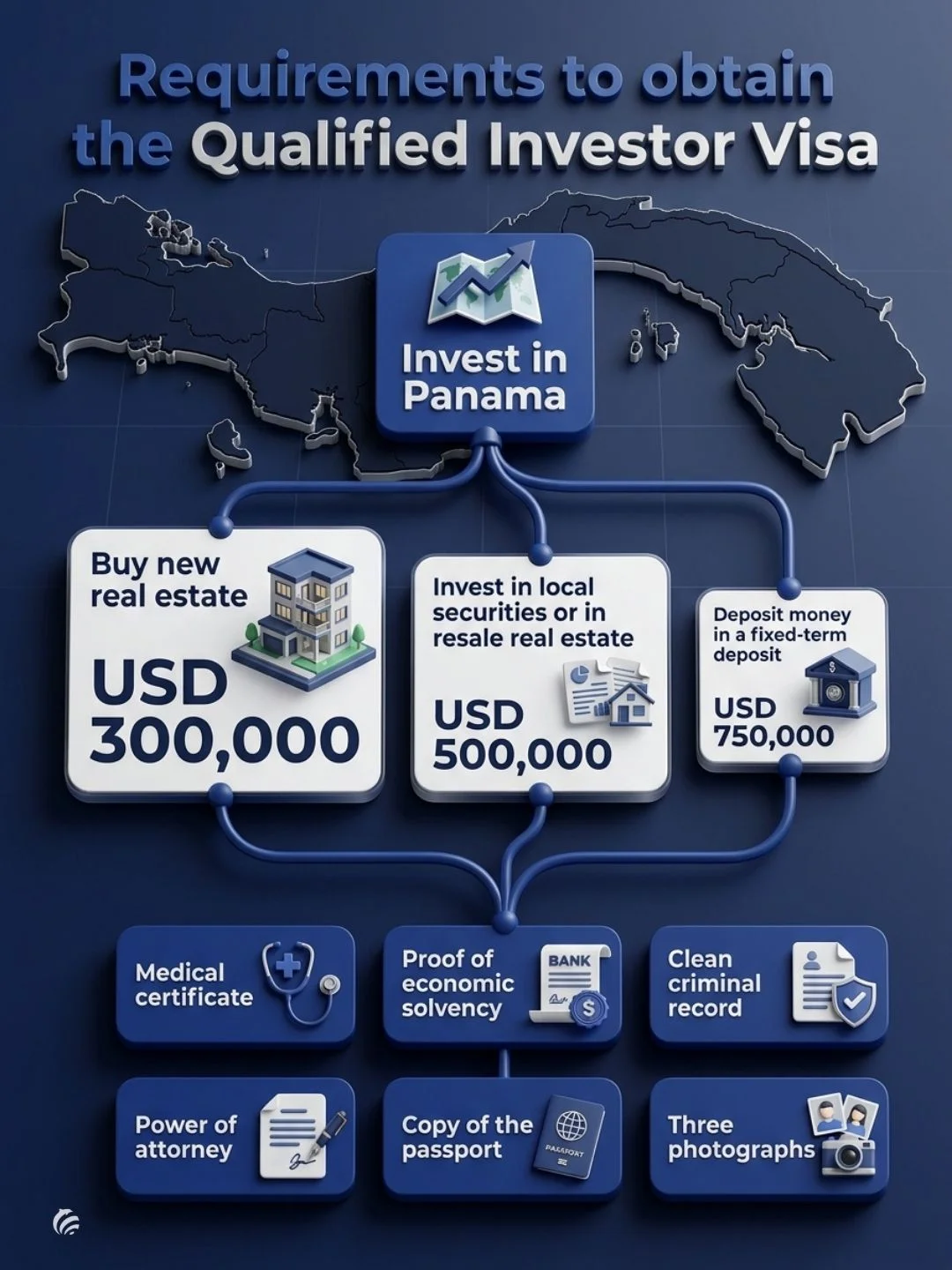
With Friendly Nations, they can obtain a residency permit for 2 years by investing USD 200,000 in real estate or a fixed-term deposit in a bank. They can choose whether to renew this visa for a permanent one after 2 years or apply directly for permanent residency through Qualified Investor. In this case, the investment is USD300,000 in real estate, USD500,000 in the stock market, or USD750,000 in a fixed-term deposit.
Panama residency for US, Canadians, Britons, and Australians
- Eligible for the Friendly Nations Visa (minimum investment USD 200,000)
- Access to immediate permanent residency through Qualified Investor (Minimum investment USD 300,000)
- Access to a stable country and a thriving business sector
- Dollarized economy
- Excellent lifestyle with great urban living, beach towns, and tropical islands
Panamanian residency: a turning point for Canadian citizens and applicants from the US, the UK, and Australia
The right to live, enter, and remain
By acquiring Panama residency, foreigners access almost the same rights as citizens, except for suffrage and the limitation on working in certain professions that are exclusive to citizens.
With their resident cards and passports, they can enter and leave the country freely, without depending on tourist visas, and are limited only by the extent of their permit.
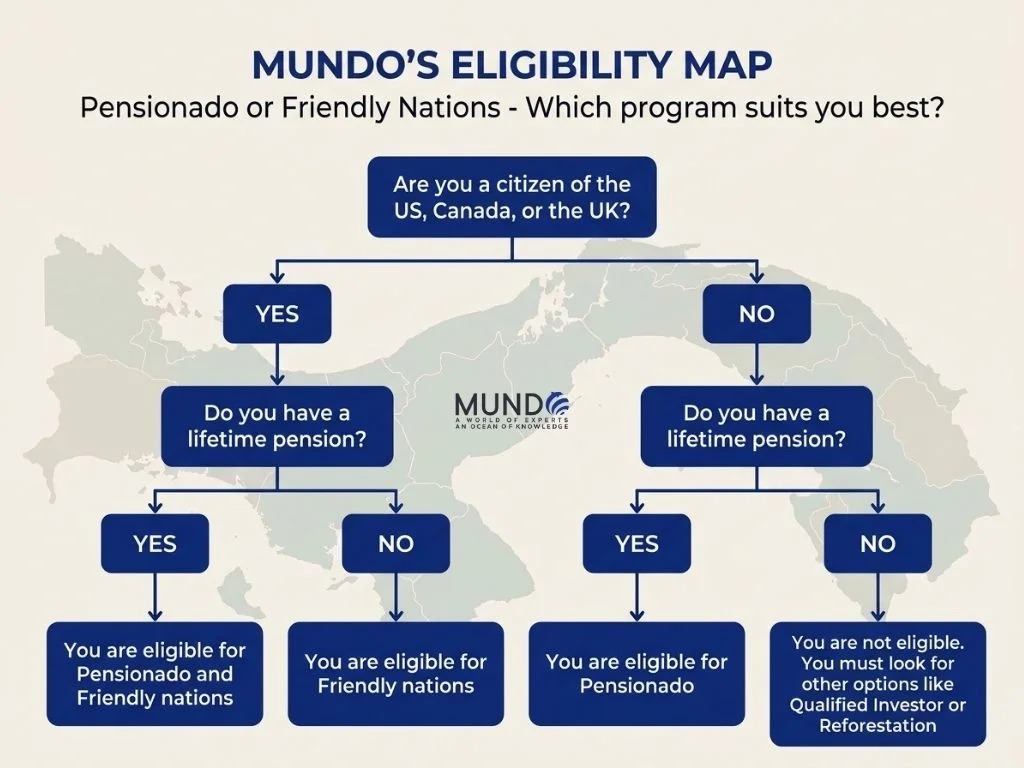
Programs like Qualified Investor and Pensionado grant immediate permanent residency, while Friendly Nations grants a 2-year residency that can later be renewed. The latter is intended for citizens of certain countries (a list of 50 nations that are considered to have friendly relationships with Panama), and countries like the US, Canada, the UK, and Australia are included.
Access to banking and local financial services
Even though banking in Panama is foreign-friendly, and even though many institutions take foreign clients willingly, account opening becomes much more straightforward for legal residents. They will be asked to present their resident card (or e-cedula), along with the typical banking requirements. Furthermore, factors like interest rates, maintenance costs, and minimum deposit/balance are more beneficial for Panamanian residents.
Local costs, healthcare access and daily life
Those who aim for a full relocation will find living expenses more convenient than those in London, Sydney, New York, Chicago, or Miami. These differences are noticeable across several areas like rent, food products, utilities, public services, and healthcare. What's more, the US expat doesn’t have to compromise on quality, as Panama’s medical facilities are as good as private clinics back home.
The path toward Panamanian citizenship
Panama doesn't have a citizenship-by-investment program, but it has the traditional naturalization route. Through this path, British, American, or Canadian citizens can apply for citizenship after five years of permanent residency and meeting all the requirements stipulated in Art. 10, Title XIII, Chapter II of the Constitution.
To be considered for the status, the applicant must have lived most of their time in Panama in the last few years before the application. This must be demonstrated with proof.
An extra consideration for British, American, Canadian, and Australian citizens is language: the naturalization process requires taking a test in Spanish. If they see Panama citizenship on their horizon, it’s convenient to start learning Cervantes’ language as soon as possible.
Panama residency: what you get and what you don’t
|
Yes |
No |
|
|
Immediate permanent residency |
Yes, through programs like Qualified Investor and Pensionado |
Other programs grant a 2-year permit |
|
Tax residency |
— |
Tax residency is not granted automatically with legal residency (it is a separate procedure) |
|
Citizenship |
— |
Citizenship can be applied for after 5 years of permanent residency |
|
Right to live in Panama |
Yes, for as long as the visa lasts |
— |
|
Right to work in Panama |
Yes |
Some visas, like the Remote Worker, don’t allow you to work in Panama |
|
Right to work as a doctor or a lawyer in Panama |
— |
No, professions like medicine, veterinary medicine, law, and architecture can be practiced only by Panamanian citizens |
Panama residency for United States citizens
Living in Panama for residents with citizenship-based taxation: residency adds another bureaucratic layer
One of the main advantages in Panama is its territorial taxation system; yet, this doesn't change much for Americans if they are not willing to renounce US citizenship. Even if permanently based in Panama, Americans have to pay tax in the US.
They may be able to use mechanisms to avoid double taxation like Form 1116, which gives the taxpayer a foreign tax credit if they prove having paid taxes elsewhere. Nevertheless, this must be discussed with a tax expert specializing in taxing foreign structures in the US.
What continues regardless: filing, foreign account and asset reporting
As U.S. citizens, they will have to keep filing taxes in the US and reporting all the assets they may have in Panama and anywhere in the world. Furthermore, they must also file taxes in Panama and in every jurisdiction where they are tax liable. One of the main principles of tax planning is understanding that fulfilling your obligations in one country doesn’t automatically exempt you from fulfilling them in another one.
What does this change in practice?
In practical terms, everything changes because the resident is now a taxpayer in two countries and must follow the rules of both. They may even need to hire two different tax advisers.
Panamanian residency for Canadian citizens
More than just counting days: How Canadian tax residency is determined
Canada moves beyond the 183-day rule, which is the one most countries apply. Rather than counting the exact number of days citizens spend in the territory, the Canada Revenue Agency (CRA) assesses tax residency by analyzing the person's connection to the country across different spheres (financial and personal).
Departure tax and what it applies to
Canadian citizens who are planning relocation have yet another matter to be concerned with: departure tax. In short, this is a tax the government imposes on emigrating citizens. To put it simply, it’s like paying capital gains tax without selling the assets.
Panama residency and British citizens
The statutory residence test
The UK presents an interesting approach to defining tax residency. For starters, the 183-day rule is the decisive factor. No questions asked: if British citizens spend more than six months a year in the UK, they will be considered tax residents no matter whether they have Panamanian residency or not.
Interestingly, if they don't spend 183 days, they are not off the hook. They apply a statutory residence test in which the authorities analyze how much time the individual was based in the UK, how much of this time they worked in the UK, what kind of ties they keep with the country, and many other factors.
Australian citizens and the implications when moving or obtaining Panama residency
How Australian tax residency is determined
Australia adopts a similar approach to its above-mentioned counterparts. The government stipulates three main parameters; falling into only one of these already makes you an Australian tax resident. As a general rule, they will analyze three categories: physical presence, intention, and life interests/connections.
Disclaimer: the information provided in this article is for general knowledge purposes only, and it doesn't constitute legal advice. All the information in this article has been taken from sources available at the time of writing; however, Mundo doesn't provide tax advice. All readers and applicants are responsible for their own taxes.
How can Mundo help you?
Mundo is an international corporation that specializes in services for the global investor, from opening companies and trusts to establishing a second residency or citizenship.
When it comes to Panama residency, we can help Canadian citizens, Britons, Australians, and Americans obtain residency in the country of the canal. Whether they choose permanent residency through Qualified Investor or a two-year visa through Friendly Nations, Mundo has plenty of experience to help them through the process.
Thanks to our in-house lawyer, we can offer a smooth process and the right advice to navigate bureaucracy and reduce setbacks as much as possible. Contact us and let's discuss the best Panama visa for you.
Apply for residency today
Contact us and let us know about your objectives, needs, and personal circumstances to design the best strategy.
Frequently asked questions
Does Panamanian residency reduce a US citizen's tax filing obligations?
No. Acquiring Panamanian residency doesn't reduce tax obligations in any other place where you may have them. The concept of legal residency and tax residency are completely separate processes and have different objectives, requirements, and implications.
Can a Canadian cease Canadian tax residency by moving to Panama?
Not necessarily. For Canadians, tax residency is not only estimated by the exact amount of time spent in a country. The CRA establishes tax residency by analyzing a person's actual connections to Canada, whether they have a spouse, relatives, businesses, or assets there.
How does the UK statutory residence test apply after moving to Panama?
The UK has a special system to estimate whether its citizens are considered tax residents in a fiscal year. For this purpose, they use the 183-day rule and analyze connections to the UK, time spent, working interests, and so on.
Do foreign account reporting obligations continue after obtaining Panamanian residency?
Yes. When obtaining Panama residency, the individual is still obliged to report his/her assets to the tax residency country or countries. As for bank accounts, reporting happens automatically through the CRS, which runs for most countries across the world. The account holder is responsible for providing truthful information about his/her tax residency jurisdictions. This includes informing of changes even when the account is open and running. The same applies to American citizens with FATCA.
What does Panamanian residency actually change?
Acquiring Panama residency changes the game entirely for the applicant. If they decide to relocate, this entails changes in their lifestyle and their tax base. If they choose not to relocate, they must be ready to travel often to maintain their status.
Does holding Panamanian residency create a Panamanian tax liability?
No. Holding Panamanian residency alone doesn't create a Panamanian tax liability. What creates Panamanian tax liability is spending more than six months in a fiscal year in the country and having assets or producing money in Panama (owning real estate, receiving income or dividends, or having an income-generating business).
What should be settled with a home-country adviser before applying?
Before applying for residency abroad, individuals must consult with tax advisors and understand the implications of this move in order to take any necessary measures beforehand.
Does Panamanian residency lead to Panamanian citizenship, and when?
Not directly and not automatically. Panama residency alone doesn't lead to citizenship. However, if an individual has been a permanent resident for five years, has spent most of those years in the country, and meets all requirements, they can apply for citizenship through naturalization.