Citizenship by investment in the Federation of Saint Kitts and Nevis
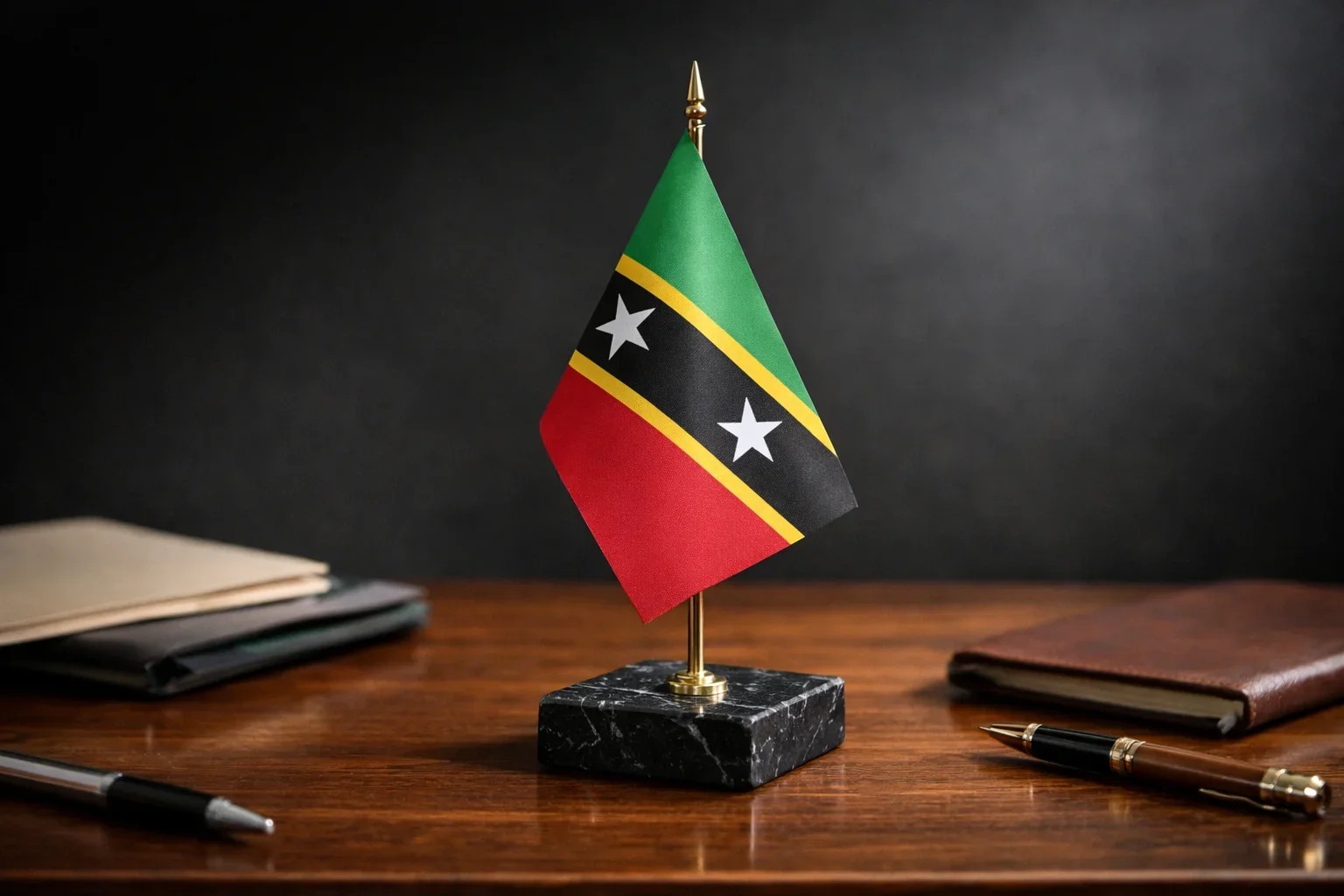
As the very first of its kind, the Saint Kitts and Nevis citizenship by investment program remains one of the strongest in the sector. Together with its neighboring nations, it has been strengthening its safety structures and monitoring systems to ensure the country's reputation remains intact.
In Saint Kitts and Nevis, applicants can choose between the two typical citizenship routes: a contribution or donation, or an investment in approved real estate. Besides, it has incorporated other programs, in which the contribution is designed for specific community-oriented projects.
With a donation of USD 250,000 or a real estate purchase of at least USD 325,000, the applicant becomes eligible for citizenship together with his or her closest relatives: spouse, children, parents, and in-laws.
Saint Kitts and Nevis citizenship in a nutshell
- Apply for citizenship with a minimum donation of USD 250,000
- Real estate: a route through an approved project from USD 325,000
- Public benefit option to support affordable housing for the community from USD 250,000
- Apply with spouse, children, parents, and the spouse's parents
- The oldest citizenship-by-investment program in the world
- Thorough due diligence and on the OECD's good side
St Kitts and Nevis: two islands, one federation, one citizenship
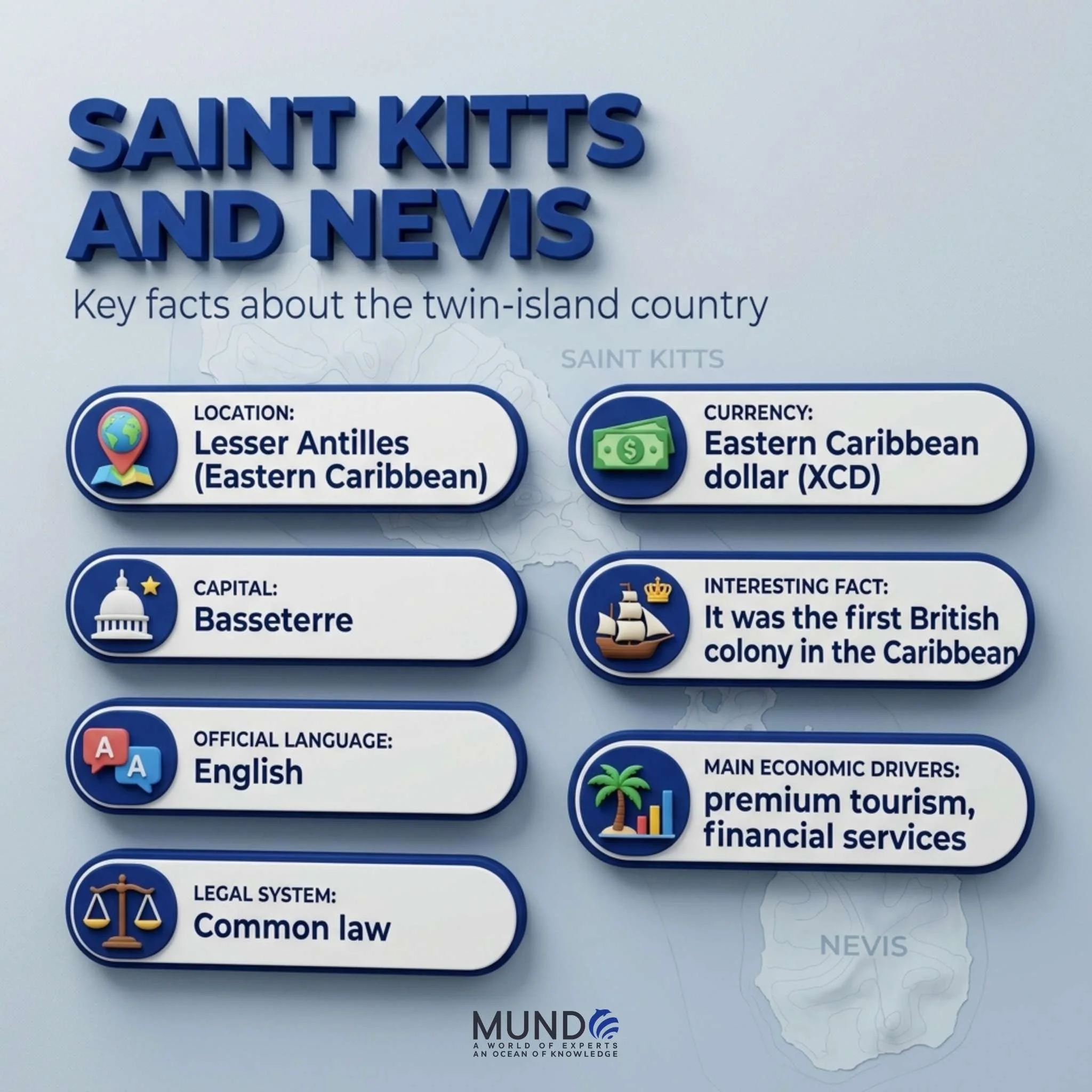
Many islands in the Caribbean have ended up forming one single country, like Trinidad and Tobago or Antigua and Barbuda. This dates back to colonial times, when the European powers unified different islands for easier administration and better use of resources. Saint Kitts and Nevis, officially the Federation of Saint Kitts and Nevis, is a two-island nation: Saint Kitts, larger and more active, and the quieter Nevis.
As a former British colony, the country maintains English as its official language, while in daily conversation people speak Creole, a combination that is found throughout the Caribbean. It also inherited the common law system from its former colonizer.
Trust the pioneers: the oldest citizenship-by-investment program and why longevity matters
Saint Kitts and Nevis is a pioneer in the entire citizenship-by-investment industry, having established the very first program of this kind in 1984.
More than four decades later, this matters because: 1) it shows the stability of the program; 2) it proves resilience and the capability of adapting to different worldwide contexts. Most importantly, the program has efficiently dealt with international pressure, which is not uncommon in this industry.
International regulatory bodies, concerned about global financial transparency, have put considerable pressure on such schemes to ensure citizenship is granted to truly deserving candidates with impeccable character, and not just handed out for sport.
St Kitts and Nevis Citizenship and Nevis LLC and trust: an important distinction
In global citizen and financial freedom publications, authors mention the Saint Kitts and Nevis citizenship and the Nevis trust or Nevis LLC. Why don't they just say the Saint Kitts trust or Saint Kitts LLC?
This is because, despite being one single nation and sharing a legal structure, Nevis is characterized by its semi-autonomous legislature, which allows it to legislate on specific matters within the island. NIETO, the Nevis International Exempt Trust Ordinance, is a prime example, known for being the basis of the famous Nevis trust. An LLC is a different corporate structure, which can be incorporated individually or in combination with a trust.
St Kitts and Nevis: qualifying routes to obtain second citizenship
No returns, no complications: making a non-refundable donation
In Saint Kitts and Nevis, applicants can choose to make a donation to the government, more specifically to the Sustainable Island State Fund. The minimum contribution is USD 250,000 for a single applicant or a family of up to 4 members, being able to add additional dependents for USD 25,000 if they are minors and USD 50,000 if they are over 18.
This fund is part of a national program focused on sustainable development with specific goals in areas like clean water, affordable energy, developing sustainable communities, infrastructure, and innovative solutions to environmental challenges. The government actively supports these sectors and is working toward goals set for 2030.
Own real estate in the Caribbean: apply through an approved real estate
Saint Kitts also offers the other typical citizenship by investment route: a real estate purchase. Projects and developments must be pre-approved by the government and have a minimum value of USD 325,000.
Buying through a developer: this option is available for a minimum of USD 325,000, paid to a developer that is working on a project locally. The asset can be sold after seven years while maintaining citizenship.
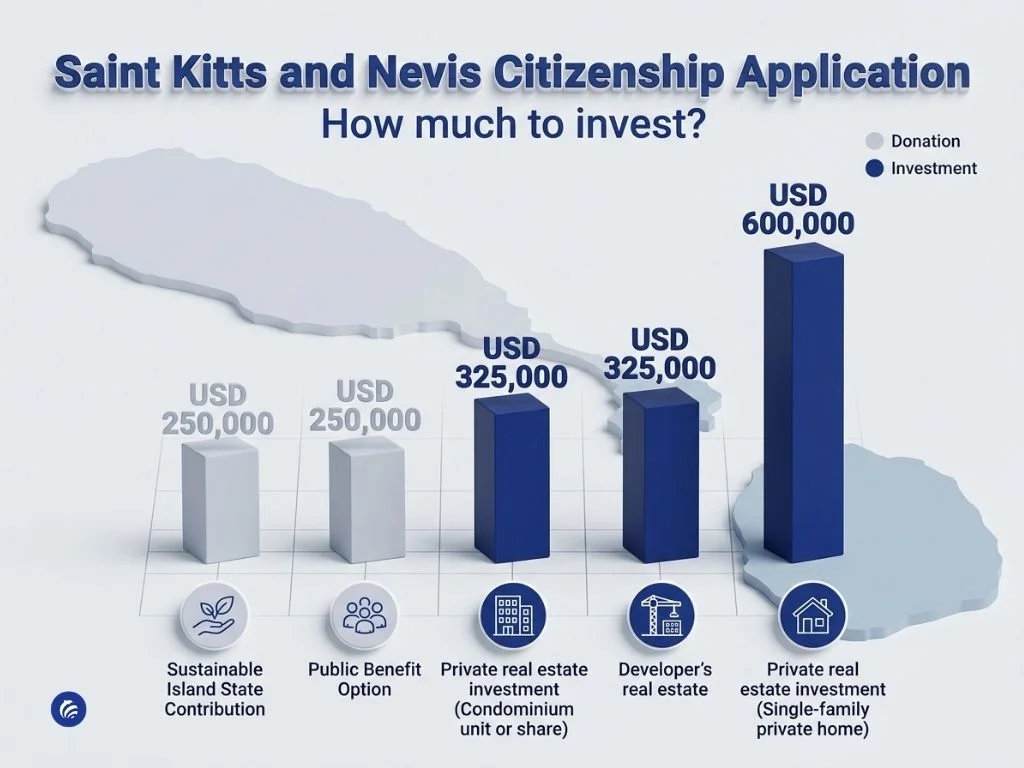
Buying through a private player: applicants can also buy from private players, which can be either a share in a real estate development or a condominium unit for at least USD 325,000. Another possibility is to purchase a private estate for a minimum investment of USD 600,000. Like the above option, the property can be sold after seven years, or before if the following owner doesn't use it to apply for CBI (unless they can demonstrate that a substantial foreign investment was injected into the real estate unit through renovation, further construction, or similar approaches).
Other approved options and their trade-offs: public benefit option
Over the years, concerns have risen across small countries regarding large injections of foreign investment. These flows, when excessive, skyrocket real estate prices and make them unattainable for locals. This concerns not only people and governments, but also investors. Furthermore, quite often, they are not satisfied with the range of pre-approved projects and/or don't want to wait for the development to be constructed.
Thus, they are increasingly choosing the public benefit option, which stipulates a minimum donation of USD 250,000 and is destined for specific projects in diverse sectors, like the construction of affordable housing for Saint Kittians and Nevisians. Other projects under the public benefit option are:
- Basseterre High School: preservation and renewal of one of the country's most important institutions. Renovation of the hub for sports, cultural events, and community gatherings, and access to sports and cultural amenities for the general public.
- Prime Creative Arts Center: construction of a prime cultural center with studios, exhibition halls, and performance spaces. Designed to encourage local talent and provide artists with a space to perform and showcase their work.
- Royal St. Kitts Beach Resorts: a combination of a solid investment, luxury accommodation, and community benefits. The project is focused on developing a sustainable project and includes a desalination plant to benefit not only the resort but also the residents and businesses, internship programs in areas like hospitality, engineering, and culinary arts, and support to community services.
- St Kitts and Nevis global expansion program: aimed at enhancing St Kitts and Nevis' position as a tourism destination across the world. It will include marketing campaigns in key media worldwide, in-flight promotions, airline partnerships, and collaboration with influencers.
|
Citizenship route |
Type |
Minimum amount (USD) |
Holding period |
Best suited to |
|
Developer's real estate |
Investment |
325,000 |
7 years |
Investors interested in real estate |
|
Private real estate investment |
Investment |
325,000 (share in developments), 600,000 (single-family private homes) |
7 years |
Investors and families who want a residence or a vacation home |
|
Sustainable Island State Contribution |
Contribution |
250,000 |
Non-reimbursable, not saleable |
Applicants who prefer simplicity |
|
Basseterre High School |
Contribution |
250,000 |
Non-reimbursable, not saleable |
Applicants who want to contribute to the country's education and strengthen the local workforce in the long run |
|
National housing incorporation |
Contribution |
250,000 |
Non-reimbursable, not saleable |
Applicants who want to help Saint Kittitians and Nevisians access affordable houses |
|
Royal St Kitts Beach Resort |
Contribution |
250,000 |
Non-reimbursable, not saleable |
Applicants who want to invest in a resort but at the same time have a positive impact on the community |
|
St Kitts and Nevis global expansion program |
Contribution |
250,000 |
Non-reimbursable, not saleable |
Applicants who want to help St Kitts and Nevis grow as a tourist hub |
The table above clearly shows how, even though there are several entry options, there are only three financial tiers (USD 250,000 for donations, USD 325,000 for developer real estate investment and shares, and USD 600,000 for a private family residence).
It's also clear that Saint Kitts and Nevis is one of the best programs when it comes to getting involved in frameworks with positive social and environmental impact.
Get our experts' insights
Discuss your case with our experts and know the St Kitts program in depth before you make a decision.
Which route suits me? Analyzing CBI routes and which option is convenient for each applicant
Investors: applicants mainly oriented towards investment, especially in real estate, will find this route more suitable for their goals. One downside is that the CBI is limited to pre-approved projects, a fact that doesn't happen in Panama, where you can invest in any kind of property anywhere as long as it meets the minimum requirements. Nevertheless, Panama only offers residency by investment, not citizenship.
Players interested in migration solely: for somebody not particularly interested in real estate, the contribution option constitutes a much more cost-effective entry, and it's much simpler. Especially if they're not planning a physical presence in the country, and if they are, they may prefer to choose a property according to their liking rather than the limited range of pre-approved units.
Disadvantage: there is no possibility of obtaining a return or of getting the funds back. Even in its worst-case scenario, the real estate investment has the possibility of selling the unit after seven years and obtaining the funds back, an option that is not possible through donation.
Applicants who want to contribute to specific initiatives: proficient investors may not see the need to add Saint Kitts to their real estate portfolio, but still want citizenship. All the public benefit options are ideal for those who want to ensure that their contribution is going to actually help the community, foster environmentally friendly infrastructure, and make a difference.
Who and how? Saint Kitts passport eligibility and due diligence
Applicant requirements
To be the main applicant of a CBI scheme, you must be at least 18 years of age, have a legit and verifiable source of funds, and be of impeccable character. In simple words, this means not having a criminal record and not being involved in activities of doubtful morals.
The due diligence standard and what it examines
The CIU conducts due diligence to confirm the applicant's identity and the activities that they declare. If they own a company, they will check its good standing; if they are an employee or service provider, they will check their bank statements and professional history. This is verified through banking letters, professional reference letters, and also by publicly available information like websites and CVs. A key part of the application process is a mandatory interview.
Who can apply with me? Dependents: spouse, children, parents, in-laws
The applicant can include, without limitation, the spouse, children under 18 years of age, and children who are physically or mentally challenged. If children are over 18 and younger than 30, they can apply too, as long as they are full-time students at the university.
Parents can be added too, starting from the age of 55, and under the same principle. Also, the spouse's parents can apply, which is one of Saint Kitts' main distinctive characteristics in comparison with other CBIs.
Grounds for refusal or non-eligibility
Reasons that will get applicants out of the eligibility scope:
- If the applicant has ever been denied citizenship in another country
- If the applicant is involved in an activity that may harm the reputation of Saint Kitts
- If the applicant has been denied a visa to any country to which St Kittian citizens have visa travel agreements
- If the applicant has a criminal record
- If the applicant is the subject of a criminal investigation
- If within the 10 years previous to the application the applicant has declared bankruptcy
- If the applicant is from any of the banned nationalities, which at the moment of writing are Russia, North Korea, Iraq, Iran, Belarus, and Afghanistan
Citizenship by investment in St Kitts: costs for a single applicant and different family sizes
|
Main applicant |
Spouse |
Qualified dependent |
Family of four (couple + 2 children under 16) |
Family of four (couple + 1 child aged 13 + 1 child aged 17) |
Family of five (couple + 2 young children + 1 parent) |
|
|
Qualifying investment (USD) |
325,000 |
Included in the main investment |
Included in the main investment |
325,000 |
325,000 |
325,000* |
|
Government fees on approval in principle (USD) |
25,000 |
15,000 |
10,000 (under 18), 15,000 (over 18) |
60,000 |
60,000 |
75,000 |
|
Due diligence fees (USD) |
10,000 |
7,500 (dependents over 16) |
7,500 (dependents over 16) |
17,500 |
25,000 |
25,000 |
|
Legal fees (USD) |
Only provided through formal consultations |
Only provided through formal consultations |
Only provided through formal consultations |
Only provided through formal consultations |
Only provided through formal consultations |
Only provided through formal consultations |
|
Total (USD) |
360,000 |
n/a |
n/a |
402,500 |
410,000 |
425,000 |
* Investment can be increased from the 5th member. Consult with an authorized agent.
Fees and costs are approximate and estimated based on the available information to this date on the program's official websites. However, programs are complex, and other fees may apply. Furthermore, this table doesn't estimate costs or expenses.
The above shows us how prices escalate when adding dependents. If applying with several young children (younger than 16), costs will be significantly lower, as they don't pay due diligence fees.
Saint Kitts and Nevis: the process towards second citizenship
Step 1: find your authorized agent
Contact Mundo or choose your authorized agent. This is mandatory because the unit doesn't accept applications unless it is through an agent.
Step 2: document collection and submission through your chosen authorized agent
Your agent is duly qualified and licensed to operate, and therefore has plenty of experience in Saint Kitts and Nevis passport and citizenship procedures. They can help you gather documents, prepare copies and apostilles, and fill out forms. When everything is ready and curated by the agent's team, they will submit the application.
Step 3: due diligence and approval in principle
At this stage, the CIU conducts due diligence to verify all information provided by the applicant. Once this is done, they can either reject or accept the application.
Step 4: make the investment or donation
Once the application is approved in principle, the applicant makes the chosen investment or donation.
Step 5: provide biometric data
This is a new requirement, and it's applied not only to ongoing applications but also to those who are already CBI citizens. In their case, they will have to renew their St Kitts passport to meet the new standards.
The applicants will have to attend the appointment with their original passport (must be valid), an appointment confirmation notice, previous passports, and the certificate of citizenship. Biometric provision is mandatory for dependents too, in which case they will have to submit legal documents proving their relationship with the main applicant. The biometric data required consists of fingerprints, a digital image of the person's face, and a digital signature, all of which are taken within a short time frame of 15 to 30 minutes.
Step 6: citizenship certificate and applying for a Saint Kitts passport
The final step is to obtain citizenship and apply for the Saint Kitts passport.
Saint Kitts and Nevis: the process towards second citizenship
Step 1: find your authorized agent
Contact Mundo or choose your authorized agent.
Step 2: document collection
Collect all documents and send them to Mundo so that we can curate them and submit them.
Step 3: due diligence and approval in principle
At this stage, the CIU conducts due diligence to verify all information provided by the applicant.
Step 4: make the investment or donation
Once the application is approved in principle, the applicant makes the chosen investment or donation.
Step 5: provide biometric data
This is a new requirement, and it's applied not only to ongoing applications but also to those who are already CBI citizens.
Step 6: citizenship certificate and applying for a Saint Kitts passport
The final step is to obtain citizenship and apply for the Saint Kitts passport.
How the St Kitts program performs when compared to similar ones: a quick overview
|
St Kitts |
São Tomé |
Antigua and Barbuda |
|
|
Contribution main applicant (USD) |
250,000 |
90,000 |
230,000 |
|
Contribution family of up to 4 (USD) |
250,000 |
95,000 |
230,000 |
|
Due diligence fees (USD) |
10,000; 7,500 (dependents over 16) |
5,000 (flat fee for the whole family) |
8,500 + 5,000 for spouse; 2,000 per dependent 12-17; 4,000 per dependent 18 and over |
|
Fees after approval in principle |
25,000 (main), 15,000 (spouse), 10,000 (under 18), 15,000 (over 18) |
750 for each family member (main applicant and dependent) |
Passport issuance costs are variable |
|
Real estate investment main applicant |
325,000 |
No real estate route |
300,000 |
As we've recently published in our featured article about São Tomé and Principe, it is clear how the African nation presents much more competitive costs than the Caribbean. This is reflected not only in the contribution but also in the fees, since it has one flat fee of USD 5,000 for the whole family, and only USD 750 for each member after approval in principle. The only downside about São Tomé is that it doesn't have a real estate alternative.
Disclaimer: all fees, costs, and program requirements stated in this article may be inaccurate or outdated at the time of reading. This article doesn't constitute legal, migration, or investment advice.
Why Mundo, or how we can assist you in obtaining Saint Kitts citizenship by investment
Mundo is a team of specialists dedicated to investment migration and other services related to the perpetual traveler and financial freedom philosophy. Key players in the sector know that obtaining a second citizenship is a smart Plan B move that can help you diversify different aspects of life and have a safe place to land if ever needed.
At Mundo, we can help you obtain Saint Kitts and Nevis citizenship by investment, as well as citizenship in other Caribbean jurisdictions, Vanuatu, and the rising star: São Tomé and Príncipe. If you're interested in corporate solutions, trusts, real estate, and residency, also write to us, because we can help you implement those strategies and tools too. Contact us today and start your application towards a second citizenship.
Every journey starts with the first step
Tell us about your financial and migration plans, and we will work out the most suitable strategy.
Frequently Asked Questions
How much does St Kitts and Nevis citizenship by investment cost?
The cost of the citizenship by investment program in Saint Kitts and Nevis must be divided into the contribution/investment and the fees/costs. While the contribution starts at USD 250,000, investments in real estate developments are required to be at least USD 325,000. Regarding legal fees, they can range from USD 77,500 to USD +100,000, depending on the size and composition of the family. This doesn't include legal fees and expenses.
What are the qualifying investment routes for the Saint Kitts CBI?
The Federation of Saint Kitts and Nevis has stipulated two main investment routes for foreign individuals to apply for citizenship. These investment routes are USD 325,000 in a foreign real estate development or USD 600,000 in a private family residence. Besides investment, there are several donation options focused on community, infrastructure, and environmentally friendly solutions. All these alternatives have different characteristics, but they all share the same minimum threshold of USD 250,000.
Can I approach the Citizenship Unit personally and submit my application without legal assistance?
No. By law, it's mandatory that all applicants to the Saint Kitts and Nevis CBI apply through an authorized agent. This is convenient, as agents have all the necessary experience to help individuals apply seamlessly and effectively.
Is a visit to St Kitts and Nevis required?
When applying for Saint Kitts and Nevis citizenship, the applicant may be summoned for an interview in person, in Saint Kitts and Nevis. At its discretion, the CIU can choose to make the interview online or in another location approved by them. Dependents older than 16 may be required to attend an interview too, if the unit considers it necessary.
Who can be included as a dependent in one application?
Those who apply for Saint Kitts citizenship can add their closest family members: the spouse, children under 18, children between 18 and 30 studying at a university, parents aged 55 or more, and parents of the spouse aged 55 or more and being financially dependent on the main applicant.
Can a US, British, Canadian, or Australian citizen hold St Kitts citizenship as well?
Yes. US, British, Canadian, and Australian citizens can apply for Saint Kitts citizenship by investment and, if they fulfill all the requirements and pass due diligence, can obtain citizenship. Whether they can maintain dual citizenship or three citizenships will depend on each country's conditions and should be verified case by case.
Does St Kitts and Nevis citizenship create a tax liability there?
Citizenship doesn't make an individual automatically a tax resident. However, other aspects and actions that come with citizenship may trigger taxation. Each applicant must consult with a tax expert to find out whether they should be paying taxes locally on their Saint Kitts and Nevis properties, or taxes in their original countries for their Saint Kitts and Nevis properties.
Is the Saint Kitts and Nevis citizenship connected somehow with the Nevis trust or Nevis LLC?
Not at all. The citizenship process in Saint Kitts and Nevis is 100% independent and separated from establishing an LLC or a trust in Nevis. These are completely different mechanisms and tools; they serve different purposes, and they aren’t interconnected.
What are the most common grounds for refusal?
In Saint Kitts and Nevis, the citizenship by investment unit can reject an application if the applicant has been denied citizenship in any other country, has a criminal record, cannot verify their source of income, is connected somehow with activities that may harm the nation's reputation, or has lied or concealed information.