Know what you own: Right of possession according to Panamanian law
Buyers interested in real estate abroad must consider two vital aspects: 1) type of ownership and 2) foreign ownership limitations. Failing to consider these factors may jeopardize the investment if the buyer ever needs to sell, rent, or repatriate funds.
When it comes to right of possession (derecho de posesión), Panama has specific rules that apply to certain areas, generally in the provinces where land has been untitled since colonial times. Knowing this is a must for those interested in Panama as a real estate hub.
Right of possession vs titled ownership in Panama
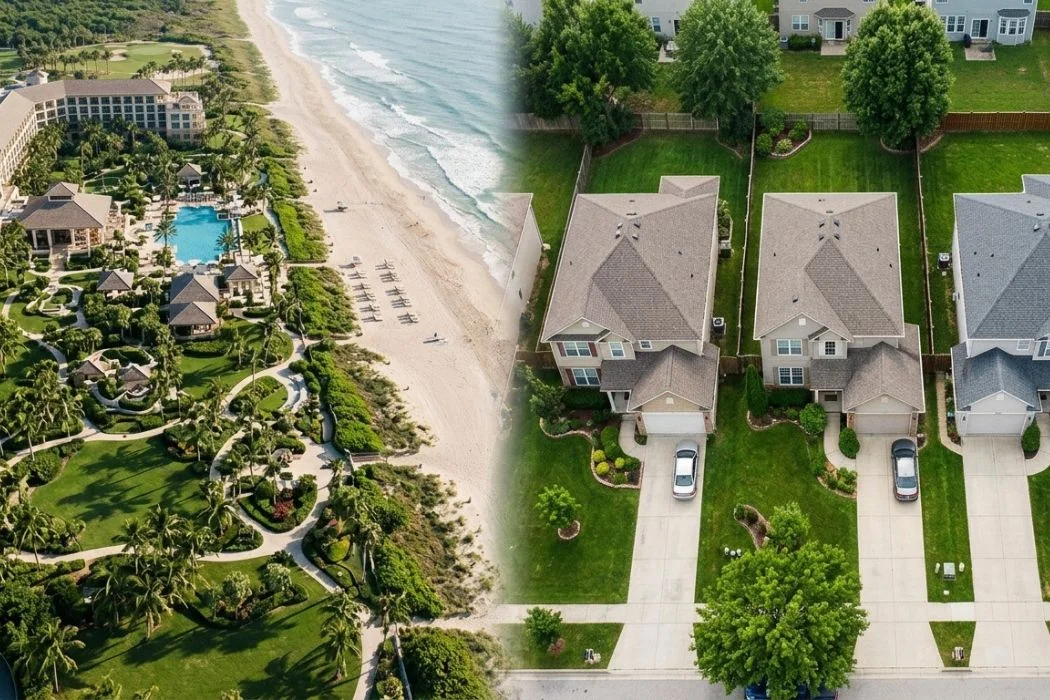
- Areas within a certain distance of the coast are sold only through derecho de posesión (right of possession)
- Foreigners in Panama have the exact same rights to real estate ownership as citizens except for land near international borders.
- Panama uses a national property registry which keeps track of transactions, finca numbers, mortgages, boundaries, and ownership, like most civil law countries
- Owning titled Panama real estate, foreigners can apply for legal residency
Right of possession vs titled ownership: the definition
What may seem complex in legal terms is actually simple when explained colloquially. When a person buys right of possession (ROP) property, they don't become the owners of the land but acquire the right to use it. This is what they call derecho de posesión in Spanish.
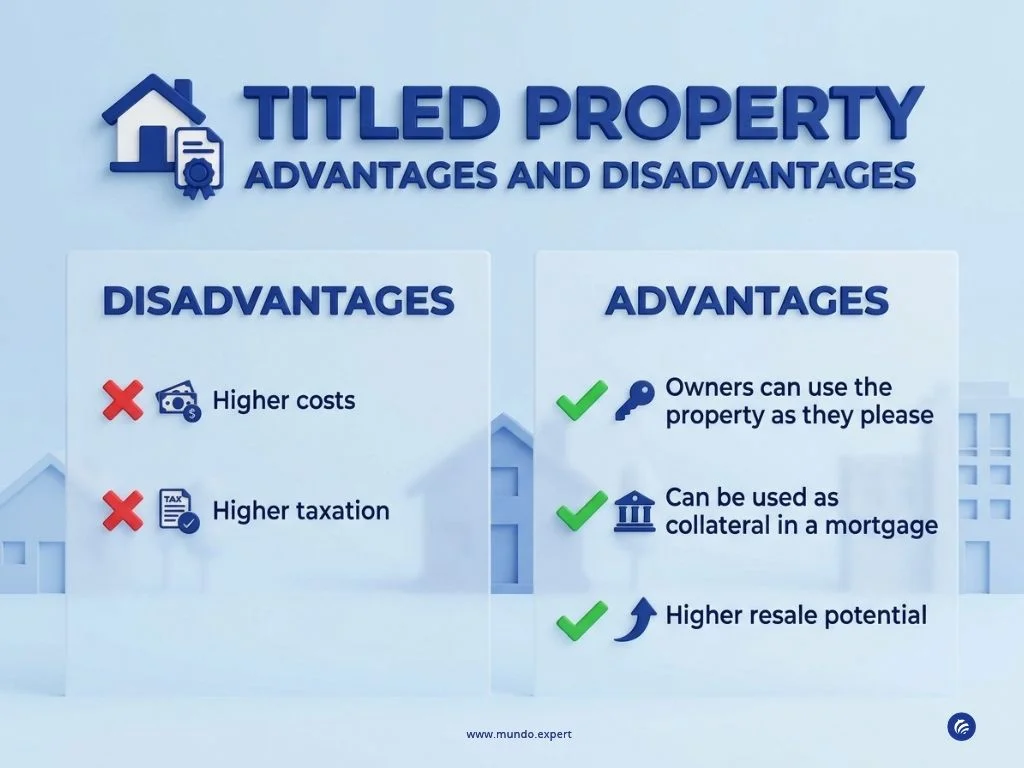
On the contrary, those who buy a titled home or land become the actual owners and can use it as pleased as long as they comply with all applicable regulations. This is what, in common law jurisdictions, is known as freehold title. For more details, refer to the comparison table included later in this article.
Watch what you buy: historical reasons and where untitled land can be found in Panama today
It’s not unusual to find untitled land in Panama, especially in the provinces. This is a result of a series of events that occurred throughout the country’s history. Even before the construction of the canal started, Panama had always been a strategic route for travelers. During the California gold rush, in the 19th century, many chose to travel through Panama rather than by land. Thus, they avoided land routes within the young America because they were ridden with bandits and robbers.
When the first European settlers came to Panama, they established themselves in a very specific strip of the isthmus: north to South from Panama to Colón, where the main maritime traffic was concentrated. Thus, land in the rest of the country was inhabited and transferred with little to no regulation.
Finally, after Panama’s independence from the Spanish Crown in 1821, the new government gave dwellers the chance to obtain a title for their lands, a possibility that most of them declined because (from a 19th-century perspective) this meant paying property tax and increasing their expenses.
Right of possession vs titled land: main differences
|
Right of possession |
Titled property |
|
|
Legal nature |
Buyer acquires permission to use the property |
Buyer becomes the owner of the property |
|
Market prices |
Lower |
Higher |
|
Taxation |
Lower or exempt |
Higher |
|
Uses or activities |
Restricted to what the owner (generally, the state) stipulates |
Whatever the owner wants (unless there are building codes or zoning regulations) |
|
Use as collateral in a mortgage |
No |
Yes |
|
Insurable |
Yes |
Yes |
|
Transferable |
Yes (subject to the state’s requirements) |
Yes |
|
Inheritance |
No |
Yes |
|
Resale potential |
Lower |
Higher |
|
Ideal for |
Commercial premises, running businesses in publicly available spaces like national parks, reserves, beaches, and near natural landmarks |
Estate planning, inheritance and succession planning, full control of the property, personal or family residence, resale after a mid-term window. |
|
Main advantages |
Commercial potential, lower costs, possibility to provide services near natural landmarks and seize tourism potential. |
Total control of the property, asset for future generations, more freedom when it comes to use, possibility to resell when needed/wanted |
Disclaimer: the table above, as well as all the details provided in this article, are meant for general information only. This article doesn't constitute legal advice. Before buying property in your home country or abroad, always consult with certified experts and analyze every aspect of the move.
What the owner can and cannot do
Although both options have some limitations, titled property offers more freedom. As long as owners follow zoning regulations (if any), they can use the land as they please.
There are some points that are worthy of consideration, like gated communities or districts that might implement construction codes, limited heights or number of stories, and setback requirements.
When buying right of possession, there are even more limitations. In some cases, concession land must be used only for the activities allowed by the state, like running specific businesses or conducting commercial activities in public areas.
The clearest example is how land is treated around national parks or protected areas, where the government allows private companies to run businesses, generally in the tourism sector (boat rentals, water activities, camping facilities, restaurants, souvenir shops, and others).
Right of possession land in Panama: how does this work?
For the reasons explained above, untitled land can be found mainly in the provinces, and some of them have specific rules. Most coastal areas and islands in the country are considered to be of public domain and can be used by private players only through concessions.
Cheaper but not a bargain: what investors should consider before entering a ROP purchase.
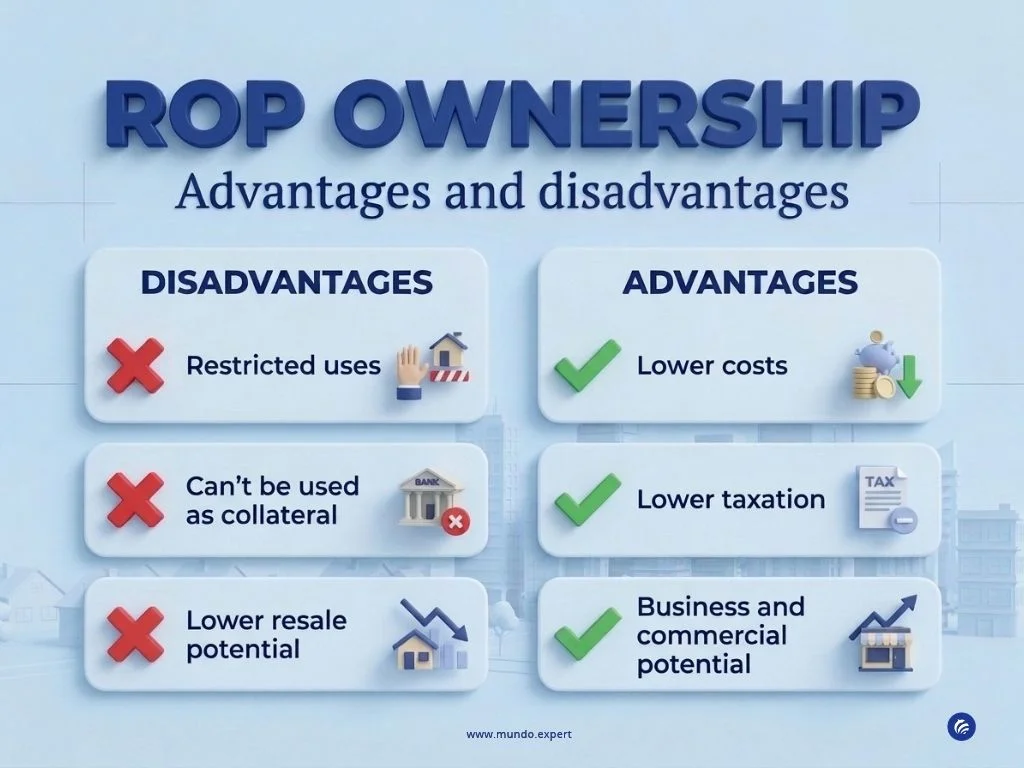
From a financial point of view, entering into a right of possession purchase is quite convenient because a) the market price is lower and b) the real estate is exempt from property tax. Nevertheless, this comes at a cost.
This type of ownership cannot be inherited by the owner's descendants, can’t be used as collateral for loans or mortgages, and is limited to the uses stipulated by the government.
A ROP real estate works well as part of a wider strategy, acquired with the purpose of generating income rather than long-term holding, portfolio enhancement, or inheritance planning.
In simple words, it serves better as an income-generating investment than real estate per se, and its true value lies in the possibility of combining it with one or several titled properties.
The value of titled property: what registration in the Panama Public Registry confers
The civil law absolute title
Being a civil law jurisdiction, a Panama property title is a public document that, in itself, constitutes proof of ownership. At the moment of buying, investors rest assured that, if the real estate has a title under the seller’s name, this is the only and undisputed owner.
They can also verify the existence of pending liens or encumbrances with the Registry and property boundaries and actual size with the ANATI, Autoridad Nacional de Administración de Tierras (National Authority of Land Administration).
This saves time, especially for the buying party, since they don’t have to conduct “chain of title” research or get property insurance in case some distant relative comes forward to claim a share of the land.
The finca number: a unique ID for every real estate
For every titled property, the government assigns a number which is equivalent to a person's ID. This number identifies the apartment complex, building, land, house, or estate regardless of the owner. Even if the real estate is sold ten times, the finca number will remain the same.
Ownership vs concession towards Panama residency
Type of ownership matters. Those who want to apply for Panama residency with a property they buy or hold, must show a title duly registered in their name or their company’s name. Simply speaking, they must buy real estate with full and verifiable ownership of the asset.
Mundo Expert’s advice: don’t buy concessioned land if you’re interested in Panama residency. All the visas connected to real estate require the applicant to demonstrate having a registered property title. In fact, Mundo experts recommend buying directly from trusted developers and in a new (or currently under construction) project. This way, buyers can apply for Qualified Investor status with the lowest investment of USD 300,000.
Due diligence or trusted developers
When buying land, an estate, or an apartment, it's vital to conduct thorough due diligence, especially in the following situations.
When buying through unknown players: Even the most experienced developers have started with just one or two projects. The fact that an agent is only beginning doesn't make them unreliable. Nevertheless, if you decide to purchase from a new player, make sure to conduct thorough research. Find out whether they have ever delivered a project before or what experience they have in the real estate sector.
When buying in the provinces: as explained above, much of the land beyond the capital and Colón is still untitled. Even when buying a house in what looks like a populated and organized country town, the buyer must verify the title’s marketability.
When deals are too good to be true: good deals exist, and investors who find them are lucky. However, a tempting deal might mean that something is wrong with the property or that it is under ROP without the seller clearly disclosing it.
Mundo: your supporting team when buying Panama real estate
Real estate is one of our most relevant areas of expertise at Mundo. We have close connections with the most reputable developers in the country, and we are master brokers for the projects of a prestigious international developer that is now operating in Panama.
Thanks to these connections, we can introduce you to some of the hottest projects, including trendy apartments downtown, upscale condos in exclusive areas, and condo suites in a hotel and casino. We can also show you some of our best alternatives still under construction, so that you can apply for the Qualified Investor visa with the lowest investment of USD 300,000.
At Mundo, we also have a Panamanian in-house lawyer and a physical office in Panama City; hence, we assist you in the process of buying real estate while simultaneously applying for Panama residency. If you want to know more, don't hesitate to contact us. Our experts will be pleased to discuss your case and outline the most suitable strategy for you.
Know all the projects before you make a decision
Contact our real estate team so that they can show you our wide range of available units and developing projects.
Frequently asked questions
What is right of possession land in Panama?
Right of possession, or derecho de posesión in Spanish, is a type of real estate ownership in which the buyer acquires the right to use land rather than becoming the actual owner. In general, concessioned land is owned by the government.
Will a Panamanian bank lend against right of possession property?
No. Right of possession property cannot serve as collateral for loans or bank mortgages.
Why is right of possession land so much cheaper than titled property?
Acquiring land under ROP is much cheaper because it has some limitations. This type of ownership cannot be passed to the following generations, and the uses are limited to government stipulations.
How do I check whether a Panamanian property is titled?
Panama has an official property registry (Registro Público de Panamá) which keeps records of every title, finca number, transfers, mortgages, and liens. All details about property condition, boundaries, and ownership are registered here and with the ANAT (Autoridad Nacional de Administración de Tierras).
Is beachfront land in Panama ever privately owned?
Beachfront land in Panama is rarely privately owned, as this is, by law, considered to be public domain.
Can I apply for Panama residency through an ROP investment?
No. All Panama residency programs require a registered title under the applicant's name, something that ROP doesn't provide.
Can I apply for Panama residency through a project in presale or construction? What about the title?
Yes. The Qualified Investor Visa allows buyers to apply by investing in a project that is either on pre-sale or under construction. In this case, they must pay the lump sum of USD 300,000 to cover the visa’s minimum financial requirement. As for the title, it will be obtained once the unit is built and registered.
What is the minimum real estate investment to apply for Panama residency?
The minimum real estate investment is USD 300,000 in new real estate and USD 500,000 in resale property, within the Qualified Investor framework.