
São Tomé and Príncipe: the country behind the passport
São Tomé and Príncipe is an island nation in the Gulf of Guinea. The African country is known for many reasons, including being a former major world cacao producer and the first country ever recognized as a UNESCO biosphere reserve. Since 2025, when we mention São Tomé, citizenship by investment comes up as another of the country’s features.
The São Tomé CBI is not older than a year, but it was still able to position itself as one of the most important in the industry thanks to its many advantages. It is the most affordable, requiring only a donation of USD 90,000 for a single applicant and USD 95,000 for a family of four members. This, plus its flexible minimum stay requirements, neutral political environment, and straightforward process, makes it one of the most relevant in its sector.
São Tomé, citizenship by investment main facts
- Straightforward program available through a donation
- Contribution of USD 90,000 for a single applicant and USD 95,000 for a family (up to four members)
- Flexible minimum stay requirements
- Ideal for large families
- Flat application fee of USD 5000 (regardless of the number of dependents)
- 100% remote application
- Accepts de facto partners and grandparents
- Children up to 30 years old
- Citizenship is passed on to future generations
Geography, population, economy and political stability
São Tomé and Principe is a country composed of two islands and archipelagos around them, with a total area of 372 sq mi. This makes it Africa’s second smallest country after the Seychelles. Located between 130 and 160 nautical miles from the city of Gabon, on the west coast of Africa, São Tomé is home to 220,000 inhabitants according to the 2020 census.
São Tomé and Príncipe was once a Portuguese colony from the moment the Europeans arrived in 1470 and decided that this would be a strategic place to settle. Later, it became the world's main cacao producer until the Caribbean islands, and their sugar cane success overshadowed it. In 1975, São Tomé and Príncipe finally became an independent nation.
Half a century later, the country of São Tomé and Príncipe is a thriving and growing state with higher social indicators than neighboring sub-Saharan countries. For instance, all São Toméan children are enrolled in the education system, and most of the population has access to piped water and electricity. Regarding its economy, it’s mainly based on agriculture, tourism, and foreign investment, which explains why the São Tomé CBI fits right in.
Furthermore, other policies besides the citizenship by investment scheme helped the country develop. In the past decades, the government passed several laws to facilitate the creation of businesses and encourage foreign investment.
The legal basis of the citizenship program
In its effort to promote sustainable growth, guarantee quality education, and preserve the rich biosphere that earned it a UNESCO recognition, the nation recently launched a citizenship by investment program, based on the Decree Law No.º 07/2025. The program’s funds are destined for key sectors: developing infrastructure, enhancing the education system, promoting eco-tourism initiatives, and building a deep-water port.
|
Value |
Note |
|
|
Minimum contribution |
USD 90,000 |
For a single applicant |
|
Minimum contribution |
USD 95,000 |
For a family of 2 to 4 members (USD 5,000 for additional members) |
|
Type of investment |
Contribution |
Non-reimbursable and does not bring returns |
|
Processing time |
2-3 months |
Currently, the process is taking longer (5-6 months) |
|
Eligible dependents |
Spouse, children (up to 30), parents (from 55), grandparents (from 55) |
Children must be unmarried |
|
Presence requirements |
No minimum stay requirements |
Ideal for individuals and families that need freedom of movement |
|
Passport validity |
7 years (adults), 3 years (minors) |
Passport renovation can be carried out through Mundo |
The table above shows the program’s main features and advantages at a glance: low costs, cost-effectiveness for large families, flexibility, and accessibility.
Citizenship vs residency: know what you are applying for
Mistaking citizenship for residency is a common error that applicants should not make. It’s important that, when applying for investment migration, they understand the difference between the two.
Residency is a status that allows a person to stay legally in a country for a limited time, while citizenship is a more stable condition that grants more rights. Citizenship includes residency but not the other way around.
Some countries, like São Tomé and Principe, Saint Kitts and Nevis, and Grenada, have set up citizenship by investment programs that offer citizenship eligibility much faster than traditional naturalization processes. This means that once they pass due diligence and are approved, they become full citizens and obtain a passport and national ID.
Residency, on the other hand, grants the right to live in the country for as long as the visa lasts and requires renewal. Thus, you are a foreign resident who has nationality elsewhere but is living legally in the jurisdiction.
During this period, foreign residents can live and work in the country, depending on what their visa allows, and they can apply for naturalization after having lived in the country for a certain period.
In practical terms, citizenship and residency are two separate approaches to migration, and many global citizens use both as they complement each other quite well. Programs offering immediate permanent residency, like Panama’s Qualified Investor Visa, are particularly sought after.
The São Tomé CBI in depth: Eligibility and minimum contribution
The contribution: amount and type
São Tomé citizenship by investment is available only through a donation, which is the first factor that differentiates it from the Caribbean programs, which have both donation and real estate alternatives. This contribution is USD 90,000 for a single applicant and USD 95,000 for families up to four members.
This means the contribution for a single applicant is USD 90,000, but for a couple, a family of three or a family of four, it’s USD 95,000. For families with five, six, seven or more members, the donation is $95,000 for the first four and an additional USD 5,000 for each extra member.
Finally, like all donations, the contribution is non-refundable, and it doesn’t bring returns.
Applicant requirements and due diligence standards
Foreign individuals can apply for citizenship regardless of their nationality. Eligibility requirements are simple: being at least 18 years old, having a clean criminal record, and a legal source of income, which will be verified through a due diligence process.
One of the program's strongest advantages over similar ones is that it doesn't ban any nationality. The only citizens who cannot apply are those from North Korea, not because of a ban, but simply because the citizenship unit cannot properly conduct due diligence on them.
Dependents: spouse, children, parents
Spouse: Applicants can include the closest members of their families. The spouse doesn't have to necessarily be legally married to the main applicant. De facto relationships are accepted as long as they provide proof of cohabitation (for at least 2 years).
Children: As for the couple's children, they can apply until the age of 30, and they don't need to study at the university. To be eligible, they must be single, more precisely “unmarried”, which means they are not eligible if they were married before.
Parents and grandparents: parents and grandparents who are financially dependent on the main applicant can apply from the age of 55 and up.
Refusal situations and reasons for rejection
Since your documents will be reviewed by Mundo, a licensed agent, rejection is highly unlikely. At this point, it's vital to clarify that lying or concealing information is forbidden. No matter how good the application is on paper, if the applicant hides information or deceives, it will eventually come to light, and the application will be rejected.
Divorced children: If, somewhere down the due diligence process, the CIU officers discover that one of the children is divorced, this may be cause for refusal.
Same-sex couples: Same sex couples or marriages are not recognized by the São Tomé CBI program. Generally, in these cases, couples find programs that allow one to sponsor the other, but this should be discussed case by case.
Inability to confirm source of funds: Confirming a legit source of income is a must; if, for whatever reason, the unit can't confirm it, this will surely be a reason for rejection.
Lying and concealing: Providing false information, whether deliberately or unintentionally, may lead to refusal. The applicant must understand that any concealed facts will eventually come to light and will jeopardize the application.
How to apply for São Tomé and Príncipe citizenship: The application process
Step 1: pre-assessment with a licensed agent
The first step is to contact an agent licensed by the São Tomé and Príncipe government, like Mundo Expert. Your agent will have an interview with you and conduct a pre-screening of your case. Among other things, they will give you a perspective on the application outcome.
Step 2: Gathering documents
Once the case has been pre-screened, your agent will help you gather all necessary documents. This includes certificate issuance, legalizations, apostilles, and legal translations.
Step 3: Submit the application
Mundo will submit your application and your documents to the São Tomé CBI unit, and you will pay the submission fee. This is a flat, non-reimbursable fee that you pay for the whole family. The fee is USD 5,000 regardless of the number of dependents: it’s the same fee for a single applicant or a family of four.
Step 4: Due diligence
In the following stage, the citizenship unit conducts due diligence while the applicant waits. Generally, this stage lasts one month.
Step 5: Approval in principle and contribution
Once due diligence is over, the unit will issue a refusal or approval. In case of approval, the applicant must make a non-refundable contribution of USD 90,000 or USD 95,000.
Step6: Citizenship and issuance of São Tomé passport
Once this has been processed, the government issues the São Tomé passport, the certificate of registration, and a national ID for the applicant and each dependent.
Realistic timing at each stage
While some stages take only a couple of business days, others take longer and might be delayed due to external factors. The following are the most common candidates for delay:
Gathering documents: depending on the complexity of the case and the number of dependents, gathering documents might take from three to several weeks. The process is subject to delays in government and private entities, national holidays, heavy workloads, or backlogs.
At this point, the client's time management, organizational skills, and proactiveness are key to effectively navigating the system. Moreover, they must consider the condition of the documents. Worn-out pages, poor-quality copies, or unintelligible text may require reissuance and delay the whole procedure.
Due diligence: If all documents are in order, the due diligence takes approximately one month at the time of writing.
Transfer of funds and cryptocurrency: Transfers can be delayed or require extra paperwork. However, applicants can optimize time by paying through the licensed agent. As licensed agents, Mundo acts as an intermediary; hence, we can receive the money from you and send it to the Santomean government. This approach allows the applicant to pay in crypto, and we pay the government in fiat money. Even if paid in cryptocurrency, the funds must come from verifiable legal sources.
Issuance of São Tomé passport and national documents: This is the longest stage in the process at the moment of writing, as it requires coordination across different entities. While the program’s objective is to process the application (from submission to the issuance of the second passport) in 2-3 months, it is now taking 5-6 months. Nevertheless, São Tomé an citizenship by investment is still one of the fastest programs, and the unit is working hard to streamline processes.
The real numbers behind São Tomé citizenship: How much does the application cost?
Contribution, government fees, and due diligence charges
The application requires a flat fee of USD 5000, which is non-refundable. The best part is that this is the only fee for the entire application regardless of the number of dependents. A second set of fees is due at the moment of issuing the second passport, the national ID, and the certificate of registration, requiring USD 750 per applicant.
If the family wishes to add more applicants after the approval, it is possible; however, fees are slightly higher. Spouses pay USD 10,000, other dependents pay USD 5,000 and newborns pay USD 500.
Legal fees, legalization and translation
As with any citizenship by investment procedure, legal fees are charged separately, and they differ from government fees or expenses. We translate all documents in Panama, where legal translations start at USD60 per page and can escalate to USD100 or more. Costs depend mainly on the number of documents, pages, and the languages involved.
Costs for a family of four
A family of four applying for the São Tomé passport will need a USD 5,000 (flat fee) plus USD 3,000 for document issuance fees (USD 750 each). This would be USD 7,000 in government fees plus a USD 95,000 donation. Legal fees, expenses (translations, duties, apostille, copies, and courier services) are estimated separately and depend on the case.
|
Single Applicant |
Family of four |
|
|
Contribution |
USD 90,000 |
USD 95,000 |
|
Government fees |
USD 5,000 |
USD 5,000 |
|
Government fees (issuance of national documents) |
USD 750 |
USD 3,000 |
|
Legal fees |
Legal fees will be provided during formal consultations |
Legal fees will be provided during formal consultations |
|
Total |
USD 95,750 |
USD103,000 |
In the table above, the difference between a single applicant and a family becomes evident. Since the largest payment is a flat fee and individual fees are quite accessible, numbers don't escalate exponentially when adding family members. This makes the São Tomé program ideal for large families.
The practical aspects of having a São Tomé second passport
Visa-free access and how to verify the current list
With the São Tomé passport, the family will have the possibility to travel without a visa to several destinations, and with eVisas or visas on arrival to many others.
Here is a list of the most relevant destinations:
- South Africa (visa free)
- Hong Kong (visa free)
- Panama (visa free)
- Philippines (visa free)
- Cook Islands (visa free)
- Singapore (visa free)
- Costa Rica (visa free)
- Bahamas (visa free)
- St Vincent and the Grenadines (visa free)
- Georgia (eVisa)
- UAE (eVisa)
- Qatar (eVisa)
- Turkey (eVisa)
- Colombia (eVisa)
- St Kitts and Nevis (eVisa)
- Seychelles (visa on arrival)
- Egypt (visa on arrival)
Although the above list is quite close to reality, it is likely that some of these agreements have changed because they depend on the governments’ understandings. When these agreements are updated, the information is not immediately published or made available to the public. If the applicant is interested in a specific destination, he or she must confirm the information at the jurisdiction’s consulate or embassy.
Disclaimer: Visa-free travel agreements change on a constant basis, based on the agreements between countries. Hence, the above list is estimated and must be confirmed through official channels.
Banking reality: how financial institutions see São Tomé an citizens
For banks, nationality is not a key concern: tax residency is. Having a São Tomé passport represents an advantage only for citizens of banned countries such as Russia. Usually, banks care more about tax residency than nationality because they don’t want to help you avoid taxes. They want to know where you have tax residency so that they can comply with the Common Reporting Standard, which mandates the automated sharing of banking information.
How to handle taxation: citizenship and tax residency are separate questions
It’s vital to demystify the concept of the second passport. Misleading publicity and detractors of the industry frequently associate having a second passport with tax evasion, but this can't be further from reality.
In fact, having citizenship or even legal residency in a country doesn't establish tax residency. Usually, physical presence is what defines this aspect, with most countries applying the 183-day rule. In short, everyone spending more than 183 days a year in a given country (approximately 6 months) becomes a tax resident and must pay tax in the jurisdiction. Interestingly, in some countries, like Panama, it's possible to have legal residency but not tax residency, as the legal status can be maintained with only a short visit every year.
Limitations worth knowing before applying
Citizenship in the African nation has many advantages, like the ability to transfer citizenship to future generations. However, applicants must consider that passports expire. Adults’ passports must be renewed after seven years and minors’ passports must be renewed after three years. In both cases, renewals can be processed through Mundo.
São Tomé vs the Caribbean: the short answer
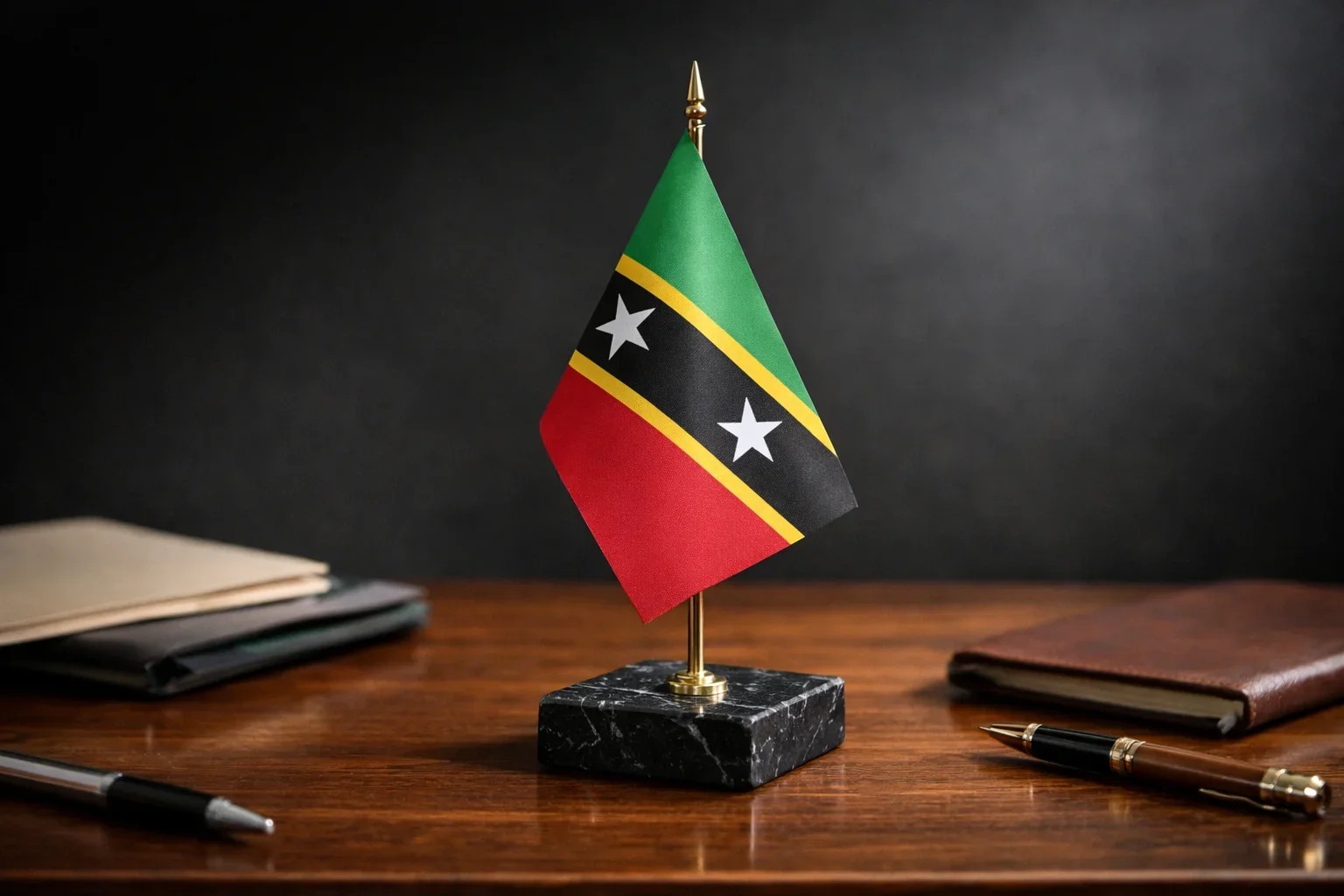
It's interesting to compare one of the newest programs with its long-standing counterparts, the five CBI countries in the Eastern Caribbean. One of them actually has the longest-standing CBI, which has been running for over four decades; this is Saint Kitts and Nevis.
A quick comparison throws light on each party’s pros and cons. On the one hand, São Tomé and Principe offers a more cost-effective alternative, especially for large families, and also no physical presence requirements. On the other hand, the Caribbean has become stricter when it comes to minimum presence, and costs are considerably higher. They compensate with their long-term history and more experience when dealing with pressure from international organizations.
|
Minimum contribution single applicant (donation option) |
Minimum contribution family of four (donation option) |
Eligible dependents |
Government fees* |
|
|
São Tomé and Principe |
USD 90,000 |
USD 95,000 |
Spouse, children, parents, grandparents |
USD 5,000 (flat fee), USD 750 (each member) |
|
St Kitts and Nevis |
USD 250,000 |
USD 250,000 |
Spouse, children, parents (+55), in-laws (+55) |
USD 10,000 (main applicant) USD 7,500 (dependents over 16) |
|
Antigua |
USD 230,000 |
USD 230,000 |
Spouse, children, parents (+55) |
USD 10,000 (single applicant), USD
20,000 (family of four), $8,500 + $5,000 (spouse), |
|
St Lucia |
USD 240,000 |
USD 240,000 |
Spouse, children, parents |
USD 2,000 + 8,000 (main applicant), USD 5,000 + 1,000 (dependents) |
*This sum doesn’t include all government fees, as each government breaks down fees differently and some dependents may be exempt from some payments. Legal fees, costs, and expenses aren’t included.
Notice the significant cost disparity between São Tomé and the Caribbean programs in the above table. The cheapest Caribbean donation is over twice as expensive as the African option, and certain fees are tenfold greater.
Disclaimer: All the information provided in this article regarding fees, costs, programs, requirements, and visa-free access is provided only for general knowledge purposes. This article doesn't constitute financial, migration, or legal advice.
About Mundo: Apply through a licensed agent
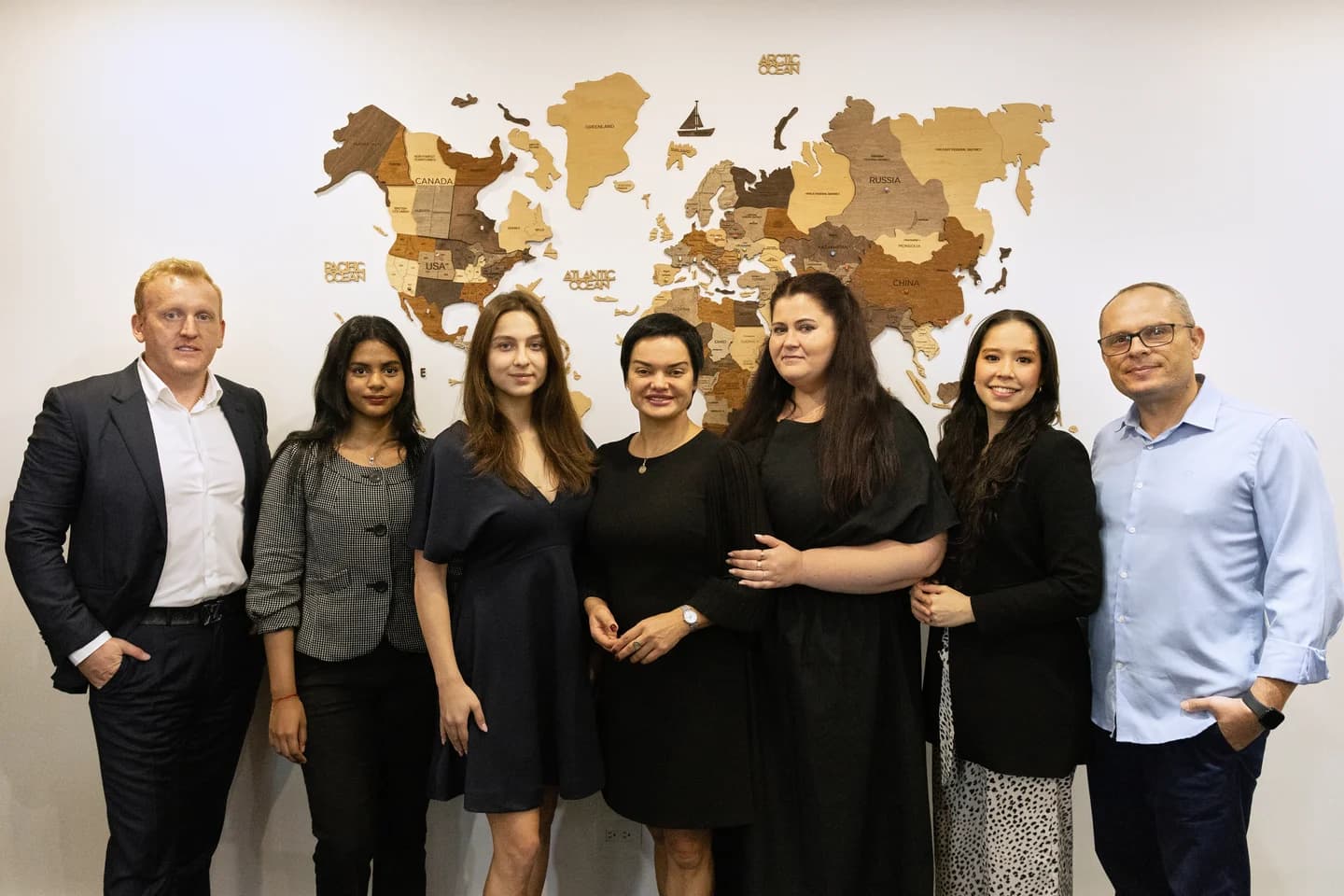
Mundo has a government-issued license that allows us to process São Tomé citizenship by investment procedures. We are a team dedicated to services for the global citizen, such as investment migration, bank accounts, corporate, and trust establishments.
Some of our most senior experts have over 20 years of experience working in the investment migration field; hence, we can help you go through the process safely and optimally.
We conduct key processes, like translating documents, assisting with the contribution transfer, and submitting the application. Contact us and let's start your prescreening so that you can submit your application for São Tomé and Príncipe citizenship as soon as possible.
Obtain São Tomé Citizenship
Our specialists are ready to help throughout the process of obtaining citizenship in São Tomé.